Silksong the mist: what players know about the fogged region in Hollow Knight: Silksong
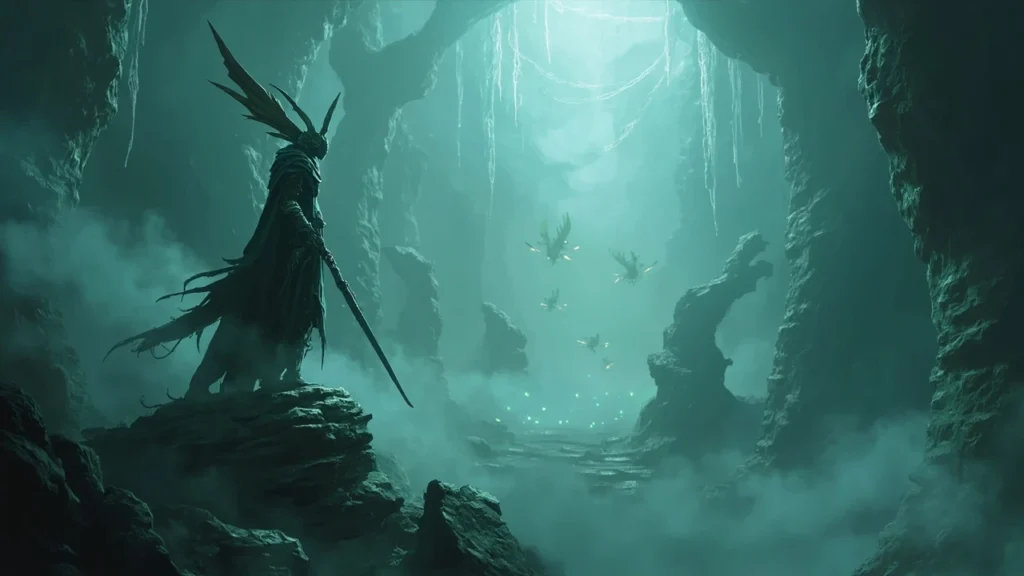
Long before Hollow Knight: Silksong had a release window, fans dissected every frame of its trailers for hints about the kingdom of Pharloom. One of the most discussed shots is a slow push into a fog-drowned valley where Hornet lands on a stone outcrop and surveys a horizon swallowed by pale haze. That image has been shortened in community discussion to a single phrase: Silksong the mist. It is not an official region name on any published map, but it captures a specific design idea that runs through several of the locations revealed so far, and it is the easiest way to talk about how Team Cherry handles atmosphere, traversal gating, and combat density in the sequel.
This article treats Silksong the mist as a recurring design motif rather than a single map cell. It is useful for two audiences: players who want to know what to expect from fog-bound zones when the game finally ships, and developers who want to study how a 2D metroidvania signals danger and rewards through weather and lighting. The piece walks through what trailers and developer interviews have shown, how the original Hollow Knight handled comparable spaces, and what the sequel seems to change about fog as a level-design tool.
What Silksong the mist refers to in the community
Silksong the mist is shorthand used in fan wikis and forum threads to describe a set of fog-heavy environments in Hollow Knight: Silksong where visibility is limited and a pale, almost luminous haze filters the background art. The phrase was popularised after a 2019 trailer showed Hornet dropping into a deep chokepoint ringed by what looked like ceremonial pillars, with a dense layer of low fog hiding the floor. As later trailers expanded the surface view of Pharloom, fans noted the same atmospheric treatment in other shots, especially the area surrounding what is now widely called the citadel’s lower approach.
It is worth being precise: Team Cherry has not published a region called the Mist. The studio’s communications refer to Pharloom as a whole and to a small number of named districts. Silksong the mist is therefore a player-side label for a visual and mechanical pattern, not an in-game location. That distinction matters because the same atmospheric toolkit can appear in several regions, and players approaching a guide expecting a single zone will be confused by the way fog returns across the map.
Where the motif first appeared on screen
The earliest widespread reference point is the E3 2019 reveal, where a dense ground fog was used to mask the bottom of a vertical drop while Hornet hopped between narrow stone platforms. The same effect reappeared in the 2022 gameplay showcase, this time layered with hanging vines and a soft cyan tint to suggest a higher elevation. In both cases the fog served a level-design purpose: it hid the floor of a pit so that the camera could focus on a sequence of platforming beats without forcing the artist to fill the negative space with detail.
A later trailer from 2024 introduced a third variation, this time with a warmer tint that suggests sunlight filtering through a canopy rather than the cold blue of the earlier shots. The colour shift matters because it tells players that the motif is not tied to a single lighting preset. The studio is comfortable swapping the palette of the haze to match the elevation, and that flexibility is what allows the same atmospheric idea to be reused across districts of the citadel without looking copy-pasted.
Why fog is a useful design tool in a 2D metroidvania
Fog, mist, and haze are not just decoration. In a tightly framed 2D game, the background carries as much information as the foreground, and the player uses parallax and silhouette contrast to judge distance. When a designer wants to slow the player down, signal an unexplored area, or compress a long corridor into a screen, fog is one of the cheapest and most readable tools available. Hollow Knight: Silksong appears to use the same logic that made the original game feel vast without ballooning file size or draw distance.
Three concrete reasons explain why the motif fits Pharloom in particular. First, the kingdom is built around a vertical citadel, and vertical spaces benefit from atmospheric perspective that disguises the depth of a fall. Second, the citadel’s religious imagery includes veils, banners, and incense, so a hazy look is diegetic rather than arbitrary. Third, the sequel’s combat relies on telegraphed enemy animations, and lower visibility forces the player to read wind-up frames more carefully, which is a deliberate pacing tool rather than a punitive one.
How fog functions as a gameplay signal
In gameplay terms, fog-bound sections tend to share four traits across 2D action games. The following list is a useful checklist for developers reading the article as a case study and for players who want to recognise the pattern when it appears in Silksong.
- Reduced sightlines force the player to commit to movement earlier than in open areas, rewarding muscle memory over reaction time.
- Background detail is simplified, which lets the artist spend polygons and animation budget on the foreground rather than on distant filler.
- Sound design carries more weight, because the player cannot rely on visual cues to place off-screen threats.
- Vertical drops are softened visually, which lowers the perceived risk of a misjudged jump and encourages exploration.
Why this is different from darkness as a barrier
It is tempting to lump fog in with the dark rooms that the original Hollow Knight used in Deepnest and the Abyss, but they solve different problems. Darkness hides the foreground and forces the player to manage a light source, which is a resource problem as much as a navigation problem. Fog leaves the foreground readable and only softens the background, so the player is still being asked to make platforming and combat decisions at full speed. The cognitive load is similar, but the failure modes are different: a player who dies in a dark room usually has too little information, while a player who dies in a fog room usually has just enough information to make a confident but wrong call.
Comparing Silksong’s mist design with the original Hollow Knight
For additional context, the original Hollow Knight used fog in a more restrained way. The deepest stretches of the Abyss and the far edges of the Resting Grounds used low-contrast gradients and a thin particle layer, but the game rarely let mist become the dominant feature of a screen. City of Tears used rain, the Deepnest used darkness, and the Queen’s Gardens used soft greens. Each biome had a single dominant atmosphere, and that atmosphere was a teaching tool: the player learned that a quieter look meant a quieter challenge.
Silksong appears to push the mist motif further. Trailers show a wider range of fog densities, including shots where the player character is half-silhouetted against a glowing backdrop. The art direction seems to treat haze as a connective tissue between regions, so a player who climbs from one citadel district into the next carries the same atmospheric context. The change is not cosmetic; it changes how the player reads space, and it raises the bar for enemy placement because the foreground now has to do the storytelling work the background used to share.
| Element | Hollow Knight (2017) | Hollow Knight: Silksong |
|---|---|---|
| Dominant atmosphere per region | One signature look (rain, dark, green) | Layered atmospheres, fog as connective tissue |
| Role of fog | Accent in a few zones such as the Abyss | Recurring motif across multiple regions |
| Player navigation cue | Strong background detail, map markers | Reduced sightlines, audio cues carry more weight |
| Art budget impact | Detail spread across the screen | Detail concentrated on the foreground, background simplified |
| Combat implication | Most enemies fully visible on screen | More off-screen telegraphs, jump-cancel windows tighten |
| Palette flexibility | Each biome locked to one palette | Fog tint shifts with elevation and district |
What the change means for returning players
A player who finished the original game in 2017 and then drops into Silksong without reading coverage will probably notice the difference within the first hour. The world feels softer, the air feels heavier, and the same areas that used to be crisply outlined now have a painterly blur. That is not a sign of lower graphical fidelity; it is a deliberate use of depth-of-field in 2D. Returning players who are used to reading the background for navigation cues will have to retrain their eyes, and the retraining is the point. Team Cherry is using the sequel to ask players to read the foreground first and the background second, which is the opposite of how the original game handled the same problem.
What trailers and developer interviews confirm
Separating confirmed fact from community inference is important when the keyword touches a still-unreleased game. The phrase Silksong the mist sits in an awkward middle ground: it is widely used, but it is not an official label, and it can be misread as a claim about a region that does not exist in the published game. The list below is restricted to material that has been shown on screen or discussed by the development team, and it deliberately avoids speculation about specific map names or quest triggers.
- Team Cherry has shown multiple shots of fog-bound environments across the 2019, 2022, and later trailers, suggesting the motif is a designed feature rather than a one-off effect.
- The studio has discussed the citadel as a single large hub with distinct districts, and the screenshots that fans associate with Silksong the mist appear to sit in the lower and middle elevations of that hub.
- Developer interviews have emphasised a sharper combat system built around Hornet’s needle and thread mechanics, and the trailer pacing suggests that the slower-looking fog sequences are a deliberate counterweight to that faster combat.
- The official Hollow Knight: Silksong wiki and community resources catalogue the visible regions, and the entries closest to the Silksong the mist visual style are the citadel approaches rather than a single labelled zone.
It is also worth noting what the team has not said. The studio has not announced a difficulty setting tied to visibility, has not confirmed an accessibility toggle specifically for fog, and has not published a region list that includes anything called the Mist. Any guide, video, or forum post that frames the motif as a confirmed game feature is overstating the evidence, and players who want to avoid disappointment at launch should treat the phrase as a description of a pattern rather than a promise.
How Silksong the mist changes combat pacing
The original Hollow Knight rewarded exploration with a feeling of earned mastery. The player would enter a new area, fail, lose geo, and slowly internalise the layout until they could traverse it without thinking. Silksong shifts the balance: the trailers show faster movement, a longer dash, and a tool system that lets Hornet chain abilities mid-air. In a faster game, fog becomes a way to reintroduce the original’s deliberate pacing without forcing the player to slow down mechanically. The character still moves quickly; the screen just hands over less information per second, so the player has to make smarter decisions with what they can see.
For developers, the lesson is that pacing tools are not the same as speed tools. Reducing a character’s movement speed is a blunt instrument. Reducing visibility is a more granular one because the designer can tune the fog density, the contrast between foreground and background, and the audio mix independently. A practical way to think about it is in three layers, each of which can be adjusted without touching the others.
| Layer | What it controls | Example tweak for a fog sequence |
|---|---|---|
| Visual density | How much of the background is visible | Lower the alpha curve so distant geometry fades faster |
| Foreground contrast | How strongly the player character and enemies pop | Raise the rim light on Hornet while keeping the background cool |
| Audio mix | How prominent off-screen cues are | Boost enemy wind-up SFX relative to ambience so telegraphs carry through haze |
| Particle layer | How alive the air feels | Drift slow vertical wisps to suggest depth without blocking platforms |
What a well-tuned fog room feels like
When the three layers above are calibrated together, a fog room should feel tense but fair. The player should be able to read the next two seconds of gameplay at all times, and the haze should reduce the player’s ability to plan the next ten seconds. That distinction is the difference between a difficulty tool and a frustration tool. A room that hides the next platform entirely is not a fog room, it is a guessing game, and the best 2D designers in the genre avoid the second category even when they lean heavily on the first.
Building a fog-heavy room in a 2D engine
A short walkthrough helps frame the design choices that sit behind a screen like the ones associated with Silksong the mist. The steps below describe a general 2D metroidvania workflow and are engine-agnostic on purpose, because the same decisions apply whether a team works in Unity, Godot, GameMaker, or a custom framework. They are also useful for readers who want to recreate the look in a hobby project or a school assignment.
- Sketch the foreground silhouette first. Decide what the player needs to see at all times: platforms, hazards, enemies, and the player character. The silhouette should read clearly against the background even when the background is heavily fogged.
- Build a simplified background plate. For a fog sequence, the background should suggest depth without competing with the foreground. Layered parallax planes with a soft falloff work well and are cheap to render.
- Apply atmospheric perspective through a fog volume. Most engines offer either a screen-space fog pass or a per-tile fog mask. Either option is acceptable; the important part is that the gradient is smooth rather than stepped.
- Test audio balance in isolation. Because the player will rely on sound more than usual, enemy telegraphs need to remain audible above the ambient drone. A useful diagnostic is to mute the music and confirm that combat cues are still readable.
- Playtest the room at the intended movement speed. A common mistake is to test at developer speed and discover that the fog hides a jump cue that only becomes obvious at full speed. Slowing the player character down for QA is not a substitute for playtesting at the shipped speed.
- Profile the result on the target hardware. A fog volume that looks soft on a desktop can introduce banding on a handheld screen, and a quick look at the lower-end target before shipping is worth the time.
Each of these steps has a failure mode worth naming. A foreground that is too clean can feel sterile. A background that is too detailed can leak through the fog and break the illusion of depth. A fog volume that uses hard bands can introduce visible stepping, especially on lower-end hardware. An audio mix that emphasises ambience too strongly can drown out the very cues the player needs. The discipline is to treat the fog sequence as a tuning problem with three dials, not a single visual effect.
Player expectations when they encounter fog in Silksong
For players, the practical question is what to do when the screen fills with haze. The advice below is generic enough to apply to any fog-heavy section in the game, and it draws on the patterns Team Cherry has used in the original Hollow Knight. None of it depends on a hidden mechanic or an unannounced item, and it is written for a reader who is new to the series as well as one who has already finished the first game.
- Listen before you move. Fog sequences are one of the few moments in a 2D action game where the audio mix tells you more than the screen does.
- Commit to jumps earlier. Reduced sightlines punish hesitation because the player cannot gather information about the landing zone once they are mid-air.
- Use the map less, and the environment more. A fog section is usually short, and pausing to check the map breaks the pacing the designer is trying to set.
- Treat the absence of enemies as a teaching moment. A quiet stretch in a fog-bound corridor is often where the game introduces a new hazard or telegraph without the player noticing.
- Save geo for safer areas. Dying in a fog section costs the same as dying anywhere else, and the longer walk back can be punishing if the player is carrying a large stack.
How to recognise when a fog room is about to spike
Two patterns show up repeatedly in well-tuned metroidvanias. The first is a long quiet stretch followed by a tight corridor with a single enemy placed just outside the haze. The second is a vertical drop that ends in a wide platform with two enemies placed on opposite sides. Both patterns are designed to punish the habit of rushing, and recognising them in advance is more useful than learning them through repetition. Players who have finished the original Hollow Knight will already know the rhythm; players who are new should treat the first ten hours of Silksong as a tutorial in how the studio stages encounters, because the rest of the game builds on those same instincts.
How Silksong the mist fits the wider Pharloom design
Pharloom is presented in trailers as a vertically arranged kingdom built around a central citadel. The art direction uses silk, threads, and a warmer colour palette than the original game, but the level-design language is recognisably Team Cherry. Each region has a dominant palette, a recurring enemy archetype, and a platforming motif. The motif that fans group under Silksong the mist is the platforming tool that ties the lower citadel to the upper elevations, and it explains why the same atmospheric look appears in seemingly unrelated shots.
Understanding that Pharloom is a single connected kingdom rather than a series of separate maps reframes the way players should think about traversal. A change in elevation is not always a level transition; sometimes it is a localised lighting change that signals a new challenge within the same region. The fog motif is one of the clearest ways the studio signals that the player is still in the citadel, just in a quieter, more contemplative layer of it. For developers, this is a useful reminder that atmosphere can do map-marking work without a literal transition.
Reading the citadel as a vertical map
One of the more useful mental models for Silksong is to think of the citadel as a stack of horizontal layers rather than a sequence of side-scrolling rooms. Each layer has its own lighting preset, its own enemy roster, and its own platforming vocabulary, and the player moves between layers through a mix of elevators, vertical shafts, and silk-based traversal. The fog motif tends to appear in the layers where the studio wants the player to slow down and read the room, and the absence of fog tends to appear in the layers where the studio wants the player to chain movement. That pattern is not a confirmed game mechanic, but it is consistent with what the trailers show, and it gives players a way to predict pacing before they enter a new screen.
Common misconceptions about Silksong the mist
Because the phrase is community shorthand, it is easy to attach the wrong expectations to it. The list below is a short diagnostic for readers who have seen the term in a Reddit thread, a Discord server, or a video title and want to be clear about what is and is not accurate.
- It is not an official region name. The studio has not published a map that labels a zone as the Mist.
- It is not a single biome. The visual and mechanical pattern appears in more than one district of Pharloom.
- It is not a difficulty mode. Fog sections are tuned individually, and a player who finds one easy will not necessarily find the next one easy.
- It is not a spoiler. Players can approach these areas without knowing the community label, and doing so will not change the experience in a meaningful way.
- It is not a hint about a release date. Atmospheric motifs are design choices, not marketing signals.
Verifying what you read about Silksong the mist
Game coverage for an unreleased sequel tends to blend trailers, developer interviews, datamines, and speculation. The standards below are a useful filter when a reader is trying to decide whether a claim they have seen about the motif is reliable. They are written for both players and developers, and they apply to almost any pre-release coverage of a 2D metroidvania.
- Check whether the claim is grounded in a shown frame of gameplay. If the source describes a feature that has never appeared on screen, treat it as speculation until the studio confirms it.
- Check whether the wording mirrors official copy. Phrases that the studio uses tend to be precise; phrases that are vague or dramatic are usually community additions.
- Check the date of the source. Trailers from 2019 and trailers from 2024 are not the same body of evidence, and design choices can change between them.
- Check whether the source distinguishes between the original Hollow Knight and Silksong. A claim that mixes the two is often a sign that the writer is generalising.
- Check whether the source names the developer or the outlet. Anonymous leaks can be useful, but they should be weighted less than a named interview or a press kit.
Frequently asked questions
Is Silksong the mist an official region name?
No. Team Cherry has not published a region called the Mist. The phrase is community shorthand for a set of fog-heavy environments shown in trailers, most of which sit in the citadel approaches. It is a useful way to talk about a visual and mechanical pattern, but it should not be treated as a literal map label.
Where does the Silksong the mist visual style appear in the game?
The same atmospheric look appears in multiple trailers, often in lower and middle elevations of the citadel. Because Pharloom is presented as a single connected kingdom, the same look can repeat across districts that share an elevation band rather than a single named zone.
Does Silksong the mist make the game harder?
Not directly. Fog reduces sightlines, which forces the player to commit to movement earlier, but the underlying enemy and hazard placement is still tuned to the same overall difficulty curve as the rest of the game. Players who struggle in fog sections usually need to read audio cues more carefully rather than to grind.
Can players prepare for Silksong the mist before release?
Yes, by replaying the original Hollow Knight and paying attention to the Abyss and the lower City of Tears, both of which use a similar atmospheric logic. Practising audio-led play in those zones is a reasonable proxy for the sequel’s fog sequences.
Is Silksong the mist a Metroidvania design trend?
It is a useful case study, but the underlying idea is older than Silksong. Limiting visibility to slow the player down and emphasise audio is a long-standing 2D action game tool. The sequel’s contribution is to make the motif a recurring connective tissue rather than a single biome.
Does the Hollow Knight wiki list Silksong the mist as a region?
Community wikis catalogue the regions Team Cherry has shown, and the entries closest to the motif are the citadel approaches rather than a standalone Mist entry. The community label is used in fan discussions, not in the official game text.
How does Silksong the mist compare with the Abyss in the original game?
The Abyss uses darkness and vertical drop to similar effect, but the sequel uses fog rather than near-black backgrounds. The change keeps the foreground readable while still reducing the player’s information, which is a more forgiving design choice for a faster character.
Will Silksong the mist areas have unique enemies?
Trailers show a mix of familiar enemy archetypes and new designs, and the fog sequences in the released footage include both. The community label refers to the atmosphere, not to a single enemy set, so players should expect a mix rather than a single new creature type.
Are there accessibility considerations for fog-heavy sections?
Reduced visibility affects players with low vision more strongly than other players, and good 2D action games offer contrast or visibility toggles to compensate. The original Hollow Knight included limited accessibility options, and it is reasonable to expect the sequel to expand on them, but the team has not published a full accessibility list for the fog sequences specifically.
Where can I read more about the design of Hollow Knight: Silksong?
The most reliable starting point is the official wiki and the press kit materials that Team Cherry and the publisher have released. Community resources can fill in detail, but they should be read alongside primary sources to avoid the speculation that surrounds any unreleased game. The Hollow Knight entry on Wikipedia is a useful orientation, and the differences and new features page on IGN’s Silksong wiki catalogues the confirmed changes from the original game.