The Ultimate Valorant Tier List of Agents and Weapons
The Importance of Valorant Tier List for Your Gameplay
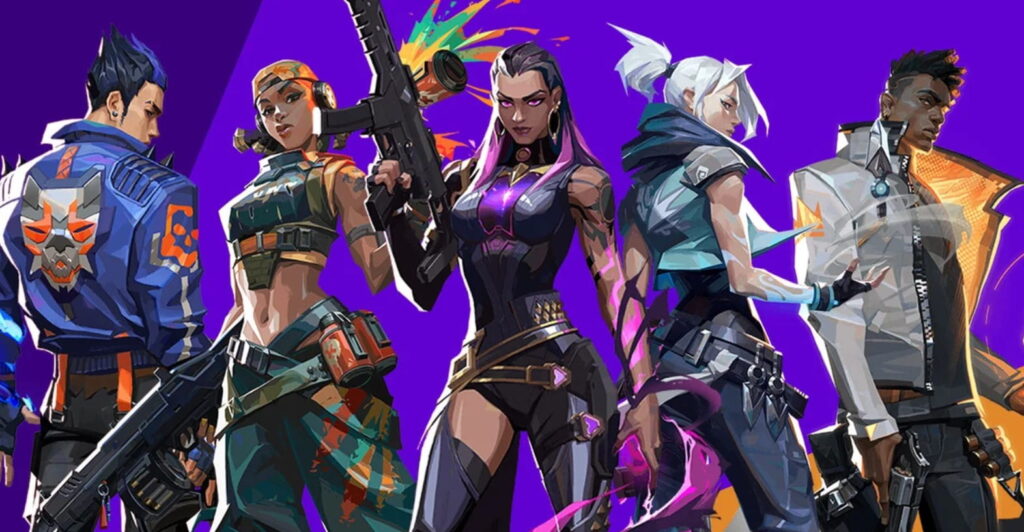
Currently, the Valorant game is one of the most popular 5v5 hero shooters with an FPS perspective. Riot makes it, the developers of cult League of Legends (LoL). The concept is to choose a hero for the 5v5 match just like on Overwatch. But the shooting mechanics are more advanced and tactical. The most important thing for regular wins is to choose the right character, called agent here. That is why you need the ultimate Valorant tier list of agents and corresponding weapons.
Unfortunately, many gamers of Valorant use different cheat programs and mods to get some benefits during online PvP matches. It is just ethically wrong since such actions can negatively impact the experience of all the gamers involved.
Hopefully, this guide will help you to refuse the concept of using Valorant cheats and tricks (if you use such techniques), because you will just use the S-tier list characters and weapons to play skillfully. Also, using cheats is not fun and always punished or at least judged.

Important notice: At the moment of writing, the game already received patch 9.0 but the following tips are given for the Valorant tier list for version 8.11, with all the nerfs and updates related to this stable version. If you want to check the predictions for the tier list after the update 9.0., check this detailed video on YouTube.
How to Play Valorant with Maximum Efficacy Rates?
The deep strategy in Valorant is excellent. Each match is a 5v5 combat where players choose from many different agents, all having their special skills. Basic smoke screens to complex recon tools and area-denial effects are some great examples. The interaction between abilities and gunplay makes every fight feel different and energetic. However, it demands thoughtful gunplay and teamwork.
The fighting with guns in Valorant feels precise and just pure fun. It is important to learn the special recoil patterns for every weapon to be considered as a skillful player. There is also the in-game economy system, partially taken from Counter-Strike meaning you ought to manage your money wisely during the game.
The carefully planned environments of Valorant’s maps are designed to fit various strategies. Each map includes distinct tactical difficulties – from the broad expanses in Breeze to the tight corridors found in Split. Once again, Riot Games shows its commitment to game balance by changing/adding the maps and the roster of agents.
But Valorant does have its flaws. Those who are just starting out might feel that the learning process is steep, and solo players could find it daunting to rely so much on teamwork and talking with others during the session. Nevertheless, Valorant is an excellent free2play hero shooter which improves regularly.
What Are the Agents in Valorant?
Valorant’s gents are the in-game heroes or characters you choose to play during the matches. Every agent has a unique background, lore, charisma, and, most importantly, a collection of unique skills that can be useful in certain teams. Agents can be classified under 4 major types: Duelists, Initiators, Controllers, and Sentinels.
- Duelists
Duelists are the ones who fight at the front line to get kills and start fights. Their abilities are made for attacking, having skills that boost their fighting power and movement. Examples of Duelists are Jett being famous for being very agile and quick and Raze being excellent at causing explosions that deal lots of area damage.
- Initiators
Initiators are the ones who prepare their teams to enter contested areas safely. Their abilities usually involve reconnaissance tools and crowd control that can disorient or reveal enemies. Sova, with his recon abilities to reveal enemy locations, and Breach using seismic blasts for disrupting enemies are some good examples of Initiators.

- Controllers
Controllers focus on altering the shape of the battlefield, employing abilities that obstruct vision, manage movement, and generate tactical chances. Agents such as Omen, who utilizes smoke screens to confuse sightlines, or Viper using toxic barriers alongside poison clouds are essential in controlling how a match progresses.
- Sentinels
Sentinels, the defensive experts, concentrate on safeguarding their team and gaining control of specific areas. They can place traps, heal wounds, or provide boosts that help maintain dominance over crucial spots on the map. Characters like Cypher who gathers information by using surveillance gadgets and sets up enemy traps, along with Sage who can heal wounds and revive fallen allies – are examples of Sentinels in action. These are the common guests in the user’s Valorant tier list.
The Agent’s Skills and Tactics
Every Valorant agent has 3 standard abilities along with one ultimate ability. When a new round starts, players acquire standard abilities by spending their in-game funds while the ultimate ability becomes more powerful as they earn kills, die, or complete objectives. This design enhances the strategy within the game since deciding when and how to deploy these skills can offer tactical advantages for players.
The agents in Valorant offer the level of tactical variety that standard FPS shooters do not have. Teams need to think about their agent setups, combining offensive and defensive abilities for different situations. The special skills of every agent promote inventive strategies and lively play, making each match exciting and new.
The roster of Valorant agents is constantly changing. You can always check the currently available heroes on the official website page dedicated to the vast catalog. Right now, there are 24 agents to pick from.
The Ultimate Valorant Tier List of Agents
The latest season has been a rollercoaster trip of meta changes and game-changing improvements, and Valorant’s Episode 8 is finally coming to an end. A new agent was added to the roster, while several of our all-time favorite agents got substantial nerfs. A new agent Raze, a popular Duelist, received the Nerfs in patch 8.11 to counterbalance her aggressive playstyle.
As with our other Warframe tier list, we have the top 5 tiers to classify the agents and weapons of Valorant: S, A, B, C, and D. S is the highest tier, while D is the lowest.
1) S-Tier Agents in Valorant
S-tier agents can control every map. We think that to this category we can add such heroes:
- Raze. On every map, her explosive kit works really well. She is a flexible option for both striking and defense because each of her abilities is potent;
- Cypher. His Trapwire can now re-arm more quickly. It is excellent for controlling and entangling adversaries. His longer Trapwire length offers him a big defensive advantage;
- Omen. Despite being a Controller, Omen’s Shrouded Step skills allow him to lead attacks much like a Duelist. He is a vital member of any squad due to his ubiquitous presence and ability to regenerate smokes;

You should also check other S-tier lists with the top choice of agents by other unbiased players. There are many websites like TierMaker or U.GG where players compose their lists. It is worth looking at, especially before playing for the first time.
2) A-Tier Agents
A-tier agents are good choices that occasionally perform better than S-tier agents:
- Jett can race across the map with her tailwind, allowing her to make aggressive moves and swift escapes;
- Clove as a Controller plays aggressively. A distinctive element of the gameplay is that she may use her ultimate to revive herself and smoke after dying;
- Sova is a fantastic substitute for Skye, particularly on Breeze and Ascent maps. His intelligence-gathering and attack-delaying skills are crucial;
- Breach is crucial for aggressive tactics and site takeovers because of its arsenal of tools meant to overcome defenses;
- Killjoy can do a lot of damage and efficiently control space because of her turret and other gadgets, making her a great solo defender;
- Skye is an effective support agent due to her Guiding Light ability – it blinds and discloses the whereabouts of enemies;
- Phoenix. Once the best Duelist, he is a dangerous enemy because of his enhanced Curveball flash skill;
3) B-Tier Agents
Although being strong choices, B-tier agents require a player to use some advanced tactics and skills:
- Yoru. His skills enable imaginative plays, but time is crucial;
- KAY/O. A great starter who needs some work to use his tools efficiently;
- Astra. Still powerful, but requires in-depth map expertise and accurate star placement;
- Neon. Her inconsistent ultimate skill prevents her from reaching higher ranks since she is heavily reliant on mechanical talent;
- Chamber. Although nerfs have lessened his power, he is still formidable in the right hands;
- Reyna. Provides minimal team assistance, but is useful for aggressive players who can rapidly move and secure kills;
- Viper. When deployed properly, Viper’s utility may still effectively control the map even after nerfs;

4) C-Tier Agents
C-tier agents rely more on maps and are less adaptable:
- Fade. She’s good at causing disturbance, but ultimately, Sova is superior. Fade does well on some maps, such as Lotus;
- Gekko. Special skills, but he values versatility over sheer strength, which reduces his effectiveness in pivotal situations;
- Brimstone. Mostly effective against Bind, his one-dimensional approach is often thwarted;
- Sage. Compared to players like Skye, she is less trustworthy because of the ease with which her wall and healing may be negated;
5) D-Tier Agents
D-tier agents require boosts since they struggle in the current version of the game:
- Harbor. He is weak since he can’t work well with other agents and has poor delaying skills;
- Deadlock. Compared to other Sentinels, her skills are erratic and have less of an impact;
- Iso. He has special mechanics skills, but also a lot of disadvantages, which makes him one of the worst agents (totally subjective);
This tier list provides a quick overview of the current meta by showing which agents are doing well and which ones are not. Such rankings are always subjective because of new patches, nerfs, and upgrades.
If this Valorant tier list of agents is not enough for you, then check the following Reddit discussion of the latest upgrades and nerfs dedicated to the current list of agents.

The Fullest Valorant Weapon Tier List
You can’t be able to win most of the matches only with S-tier agents. Gamers also need to know about the use of the most powerful weapons. The following Valorant tier list focuses on some of the best and worst weapon picks in the game 8.11 version.
The S-Tier Weapons in Valorant:
1) Phantom
Phantom is a common choice for any Valorant player. With silent shots and more rapid fire this weapon suits is good for close and medium-range encounters. The recoil pattern of the Phantom is also simpler to manage if you prefer spraying down enemies. This gun with a suppressor offers sneak plays and reduces the chance of being seen when shooting. Although it deals with damage reduction at farther distances, the Phantom’s adaptability and simplicity make it a top choice in most gaming situations for Valorant players.

2) Operator
The Operator is the ultimate sniper rifle since it can kill someone with one shot to the head or torso. It’s a risk-reward option that has the potential to change the course of a match since its expensive price tag belies its power. Expert players will find the Operator invaluable for holding angles and hitting important targets if they can get over its sluggish handling and mobility limitations. The Operator is still a very powerful weapon in the proper hands, even with the latest nerfs to movement speed when scoped in.
A-Tier Weapons:
1) Sheriff
The Sheriff is an extremely strong and skillful sidearm. It is a dangerous choice during eco rounds due to its tremendous damage output, which allows it to kill with a single headshot at close to medium range. The Sheriff’s main shortcomings are its small magazine capacity and strong recoil, although it may be lethal in skilled hands.
2) Bulldog
The Bulldog is appreciated due to its cost-effectiveness and versatility. Its burst-fire mode makes it highly effective in medium-range engagements, while its fully automatic mode is useful for close encounters. The Bulldog offers a balanced performance with manageable recoil and decent damage, making it a solid choice for players who want to save credits while still having a reliable primary weapon.

3) Spectre
The Spectre is a must-have submachine gun for many players. Its high rate of fire and excellent mobility make it perfect for close-quarters combat. The Spectre excels in early rounds and force-buy situations because of the good balance between cost and performance. A good addition to the Valorant tier list of weapons for beginners.
B-Tier Weapons:
1) Guardian
When used by accurate players, the semi-automatic Guardian rifle can do a lot of damage with each shot, making it very deadly. Its main selling point is its “one-shot headshot” potential at any range, making it a more affordable option than the Vandal and Phantom. The Guardian is less forgiving in close quarters, due to its slower rate of fire and need for exact aim. The Guardian is an extremely effective weapon for those who can control its rhythm properly.
2) Judge
The Judge is a shotgun who is most effective in close-quarters combat. It is an intimidating option for holding tight angles and chokepoints due to its tremendous damage output and rapid firing capacity. In small areas, the Judge can destroy groups of foes, but at larger ranges, its efficiency drastically decreases. The Judge is a B-tier shotgun because of its specialized use and high price.
3) Ares
The Ares machine gun is useful for holding down areas and suppressing fire because of its enormous magazine capacity and rapid fire. Its accuracy and recoil have been enhanced by recent improvements. When you need to control tight passageways or defend against rushed enemies, the Ares performs at its best. Its limited adaptability is caused by its slower moving speed and higher reload time.

C-Tier Weapons:
- At any range, the Marshal is an affordable sniper rifle that may harm with a single hit to the head. It is helpful for aggressive plays because of its rapid mobility and quick scoping;
- The Stinger is an inexpensive submachine gun with a rapid rate of fire that works well in close quarters;
- The pump-action shotgun Bucky makes it especially effective at close range. Although its secondary firing mode is good for long-range confrontations, other weapons still outclass it in terms of adaptability;
All other weapons belong to the D-tier list in Valorant. They are not bad but require more skills and advanced tactics to use them for winning rates. Did you like this Valorant tier list on weapons? Share in the comments!
Frequently Asked Questions about Valorant Tier List
- How does Valorant’s tactical gameplay differentiate it from other first-person shooters?
In contrast to many shooters who only concentrate on reflexes and shooting abilities, Valorant requires from players cooperation and strategic planning. In addition to being proficient with weapon recoil patterns, players must also learn how to make the most of their agent’s unique skills. This strategy may include healing teammates, disclosing enemy positions, and creating smoke screens.
- How does the map design in Valorant enhance tactical gameplay?
The map design of Valorant is intended to improve tactical gaming by providing a variety of settings that accommodate various tactics. Every map has a different layout with several sightlines, chokepoints, and bombsites, so players have to adjust their strategy. Breeze’s vast expanses foster long-range confrontations and precision targeting, while Split’s compact tunnels encourage close-quarters fighting and the strategic use of skills to dominate restricted places.
- What makes Valorant’s economic system important for strategic planning?
The economic structure of Valorant is a key factor in strategic planning as it affects the choices players make about equipping themselves with skills, weapons, and armor before each match. Valorant players must carefully manage their credits to maximize their chances of winning subsequent rounds. Players receive credits based on their performance rates after each match. Teams must manage their economies in this risk-reward dynamic to preserve competitive advantages. Economic management is a crucial component of Valorant’s strategic gameplay.

- How does Valorant’s visual style affect the gameplay experience?
Because Valorant’s graphic design strikes a balance between practicality and beauty, it makes a big contribution to the gameplay experience. A clear and understandable interface is essential for competitive play, and Valorant has it. Players can immediately find the required elements of UI during fast-paced matches.
Conclusion
Hopefully, this guide with the focus on the Valorant tier list of agents and weapons was quite helpful for beginner and expert players. Remember that cheating is not fun at all, though sometimes you can use it for practice. However, it is much fun to learn the skills of different heroes and use them in fair play to become an ultimate champion. Valorant is great at this point. In addition, the best thing – soon it comes to consoles as well! Follow our blog to get updates about this awesome hero FPS shooter.