Poisonous Trail Map 2 in Red Dead Redemption 2: Location and Walkthrough
Poisonous trail map 2 in Red Dead Redemption 2
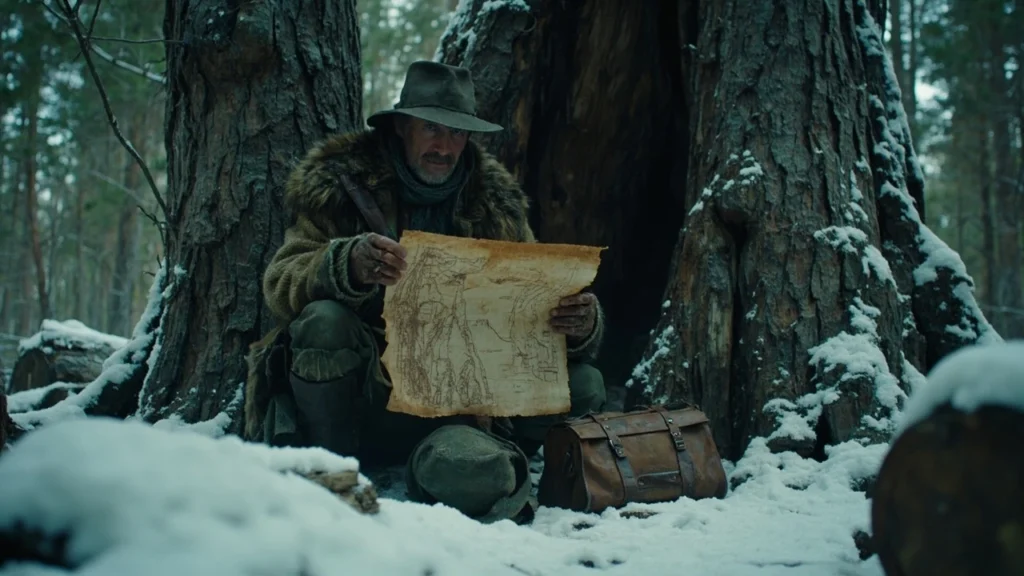
The poisonous trail map 2 is the second hand-drawn clue inside the Poisonous Trail treasure hunt in Red Dead Redemption 2. Players pick it up from a small lockbox during the first stage of the quest and use the sketch on the paper to find the next cache, which contains a third map and eventually leads to a small gold bar. The second map is the one that trips most players up, because the drawing is rougher than the first clue and the landmark it points to sits in a less obvious part of the map.
This walkthrough covers the verified location, the steps needed to read the clue correctly, the path from the first cache to the second, and the route that follows. It also explains the common mistakes that cause players to search in the wrong county, and it points back to the starting step of the hunt for players who are still on the earlier map. If you are already holding a scrap of paper with a scratched rock on it, the section that matters most is the one describing the Face Rock and the withered tree.
Starting the Poisonous Trail treasure hunt
The Poisonous Trail is a multi-step treasure chain, which means the second map cannot be picked up directly. You need the first map, the cache it points to, and the second map inside that cache before the poisonous trail map 2 becomes the active clue. Players who try to skip ahead usually end up searching the wrong region because the second drawing only makes sense once you have seen the first cache.
The first stage of the hunt begins in the West Grizzles, the snowy region that hosts the early story chapter of the game. The Cairn Lake Lodge sits just southeast of the abandoned town of Colter. Inside the lodge, a lockbox under one of the beds contains the first map. Looting it starts the chain and adds the Poisonous Trail entry to the in-game journal, which is the best way to keep track of where you are in the sequence.
What the first map actually shows
The first map is a small piece of parchment with a rough sketch of a rock face shaped like a human head, a path winding past trees, and a small X near the bottom. The drawing is intentionally crude, which is part of the design. The game wants the player to translate the sketch into a real-world landmark rather than follow exact coordinates.
Three details matter when reading the first drawing:
- A rock formation that resembles a face in profile, which is the reference point.
- A path that curves to the right of the rock and drops down a slope.
- A withered tree and a fallen log at the end of the path, which mark the dig site.
These three details together narrow the search to a single county, and the second map uses the same visual language with one extra clue layered on top.
Linking the first cache to the second map
Once the first map is in the journal, the player needs to translate the rock face sketch into a real location. The formation is Face Rock, a roadside outcrop in Lemoyne, north of Rhodes and north of the Hill Haven Ranch along the road that climbs into the Scarlett Meadows. As described in the official Poisonous Trail Treasure Map 1 guide, Face Rock sits on the left side of the road when you ride northwest out of Hill Haven Ranch, which is the easiest way to confirm you are looking at the correct landmark.
From Face Rock, the path leads to the right, past a tree, and down a slope. At the base of that slope is a withered tree trunk with a fallen log behind it. Searching the base of the withered trunk reveals a small hole and a second lockbox, and that box is what contains the poisonous trail map 2. Looting it advances the chain and replaces the first entry in the treasure journal with a new clue.
How to read the second map
The poisonous trail map 2 looks similar to the first one, but the sketch has changed in two important ways. The rock face is still there as a reference, but the path now passes a second feature, and the X is positioned further along the trail. Players who try to read the second map using only the first map’s landmarks will overshoot the dig site.
The drawing is best read in three passes rather than one:
- Locate the rock face and confirm the direction of travel relative to it.
- Follow the sketched path until it passes a second icon, usually a tree or a fence line.
- Identify the small X or marked point at the end of the path, which marks the cache.
Reading the map in that order reduces the chance of stopping too early or wandering into the wrong part of the county. It also makes it easier to backtrack if the first attempt produces nothing.
What changes between map 1 and map 2
Comparing the two maps side by side is the fastest way to understand what the second clue is really telling you. The table below summarizes the visible differences and what each one means for navigation.
| Element | Poisonous Trail map 1 | Poisonous trail map 2 | What it means for the route |
|---|---|---|---|
| Reference landmark | Face Rock in the Scarlett Meadows | Same Face Rock, used as the starting point | Both maps start at the same rock face; do not search for a different outcrop. |
| Path direction | Curves to the right of the rock, drops down a slope | Continues past the first tree, bends toward a second feature | Do not stop at the withered tree from map 1; keep moving along the path. |
| Marked feature | Withered tree and fallen log | Second tree, a stone, or a fence line, depending on the version | Look for the second icon, not the first one, when comparing the map to the landscape. |
| End point | Lockbox that contains map 2 | Lockbox that contains map 3 or a small gold bar | If a small gold bar drops, the chain is complete for that character. |
The table is useful because the second map is rarely read in isolation. Most players check it against the first clue in the journal, and the differences above are the part of the drawing that actually moves the player forward.
Finding the second cache on horseback
The second cache is in the same general area as the first, but the route is longer. Riders usually approach from the Hill Haven Ranch road, which is the most reliable access point because the road is wide enough for a wagon and runs near enough to Face Rock that the landmark is easy to spot on the way in.
A clean approach follows the same pattern used for the first cache, with two changes:
- Instead of stopping at the withered tree, ride past it and continue along the sketched path until the second landmark comes into view.
- When the second landmark is reached, dismount and search on foot, because the lockbox is small and is often hidden behind a rock or a root system rather than placed in open ground.
Searching on foot matters. The interaction prompt for the cache is small, and the lockbox blends into the environment, especially in the Scarlett Meadows, where dead wood and grey stone are common. Walking the last few metres also lets the player check for the faint X scratched into the dirt, which is the only on-the-ground indicator that the cache is directly below.
Why the second cache is easy to miss
Three things make the second cache harder to find than the first, and they are the reason most players end up searching the wrong county.
- The first map’s cache is near a road, while the second sits slightly off the road, in a wooded section that is not visible from the saddle.
- The weather in the Scarlett Meadows changes often, and overcast lighting flattens the contrast between the rock face and the surrounding trees, which makes Face Rock harder to identify on a second visit.
- The second map’s sketch is less precise than the first, so players who rely on exact shapes rather than relative position tend to overshoot the landmark.
Working around those three issues is mostly a matter of preparation. Riding in daylight, approaching from the same road used for the first cache, and confirming Face Rock before dismounting will reduce the search time significantly.
Inventory, tools, and prep before you ride
Most players ride out for the Poisonous Trail chain without preparing, because the early caches do not need any special tools. By the time the second map is active, however, a small amount of preparation saves a real amount of time. The list below is a practical pre-ride checklist that has nothing to do with the game’s story and everything to do with the way the treasure chain is paced.
- Carry at least one core or tonic in case the route passes through grizzly or cougar territory in the West Grizzles.
- Keep a repeater or a rifle in the saddle slot, because the Scarlett Meadows host bandit camps and random ambushes.
- Save the game near Hill Haven Ranch before dismounting, so a wrong turn does not cost a long ride back.
- Open the journal and confirm the active entry is the poisonous trail map 2, not the first map or a different treasure chain.
None of these are hard requirements, but each one removes a small risk. For additional context, Treasure hunts in the game are designed to be replayable, and the chain is easier to follow when a failed attempt does not also drain resources.
Common mistakes and how to avoid them
Even players who have completed the first cache often stall on the second one. The mistakes are consistent, and most of them come from reading the second map as if it were a copy of the first. A short list of the most common errors helps because the same problems show up in the third map as well.
| Mistake | What it looks like in-game | Why it happens | How to fix it |
|---|---|---|---|
| Stopping at the withered tree from map 1 | The player searches behind the same trunk twice and finds nothing new | The first cache’s landmark is still visible, which makes it a natural stopping point | Ride past the withered tree and follow the path until the second landmark appears |
| Looking for Face Rock in the wrong state | Hours spent searching New Hanover or the Heartlands for a similar rock | The sketch on map 2 is rough, and similar rock faces exist outside Lemoyne | Confirm the road is the one climbing from Hill Haven Ranch toward Scarlett Meadows |
| Treating the chain as a single-step quest | Player runs to the first X mark and expects the quest to end | Treasure chains are not advertised as multi-step in the in-game UI | Open the journal after each cache to confirm the next map is now active |
| Searching on horseback | The player rides in circles and the interaction prompt never appears | The cache is small and the prompt only triggers within a short range | Dismount and walk the last few metres, scanning the base of trees and rocks |
Each of these mistakes has the same underlying cause: the player is reading the second map as if it were the first. Once that habit is broken, the chain becomes much easier to follow, because the second map is designed to build on the first, not to repeat it.
What the second map leads to
The poisonous trail map 2 is a mid-chain clue, not a final objective. The cache it points to contains either the third map or, in some playthroughs, the final reward. Players who are running the chain for the first time should expect at least one more map after the second one, and they should keep the journal open until the entry marks the chain as complete.
The reward for completing the full chain is a small gold bar, which is one of the standard treasure-hunt payouts in the game. The gold bar is sellable at a fence, and it is useful in the early game when the player is short on cash. By the time the chain is finished, most players are far enough into the story that the value of the bar is more about progression than about the money itself.
Reading the chain as a tutorial
The Poisonous Trail is one of the first multi-step treasure chains a player encounters, and it is structured as a tutorial in disguise. Each map adds a small layer of complexity: the first teaches the player to read a rough sketch, the second teaches the player to chain clues, and the third teaches the player to compare landmarks against the broader map. The poisonous trail map 2 is the step where most players realize the chain is a chain, which is the moment the rest of the game’s treasure hunts become easier.
For developers interested in quest design, the chain is a useful reference. It uses a single visual language across three maps, it scales complexity by adding landmarks rather than changing the rules, and it gives the player partial credit at each step in the form of a new map piece. The same structure is used in other chains in the game, and the lessons from the Poisonous Trail apply to most of them.
Comparison with similar treasure chains in the game
The game ships with several multi-step treasure chains, and the Poisonous Trail is the simplest of them. Placing it next to the others helps explain why the second map is the step where most players slow down. A short comparison also makes it easier to choose the right approach when a different chain is started.
| Treasure chain | Number of maps | Starting region | Skill required to read the maps | Where the second map usually stalls players |
|---|---|---|---|---|
| Poisonous Trail | 3 | West Grizzles, then Lemoyne | Low; rough sketches, clear landmarks | At the withered tree, before the second cache |
| Jack Hall Gang | 3 | Mountains north of Valentine | Medium; uses terrain shapes rather than single rocks | At the second cache, which sits on a cliff |
| High Stakes | 3 | Flatneck Lake, then Saint Denis | Medium; mixes urban and rural clues | Inside Saint Denis, when the map points to a rooftop |
| Le Tresor des Morts | 4 | San Luis Valley, then Bayou Nwa | High; uses partial coordinates and obscure landmarks | At the third map, which requires crossing the bayou |
The comparison shows a pattern. In every chain, the second map is the one that breaks players, because the first map teaches the basic reading skill and the third map benefits from the skill the player has just learned. The poisonous trail map 2 sits in the same slot, and the strategies that work for the second map of Jack Hall Gang or High Stakes are the same strategies that work here.
What other chains borrow from the Poisonous Trail
Three design patterns from the Poisonous Trail show up in the more complex chains:
- A reference landmark that appears on every map, so the player can reorient quickly.
- A path that grows longer with each step, which scales the difficulty without changing the rules.
- A reward that is delivered as a small physical object, which lets the player confirm completion without a UI prompt.
These patterns are not unique to this game, but the way they are stacked is consistent. For a player, the takeaway is that the second map in any chain is the one that rewards a slower, more deliberate read, and the poisonous trail map 2 is a good place to practice that habit.
Player-guide checklist for the second cache
For players who want a clean run, the steps below summarize the route from the first cache to the second. The list is intentionally short, because the actual navigation is the part of the treasure hunt the player has to do themselves. The checklist is meant to confirm preparation, not to replace exploration.
- Confirm the active journal entry is the poisonous trail map 2 before riding out.
- Approach Face Rock from the Hill Haven Ranch road, riding northwest along the main road.
- Identify the rock face on the left side of the road and dismount near the base of the slope.
- Walk past the withered tree and the fallen log from the first cache, following the path sketched on map 2.
- Stop at the second landmark shown on the map, which is usually a second tree, a stone, or a fence line.
- Search the base of the landmark on foot until the interaction prompt appears.
- Loot the lockbox, read the next map, and update the journal entry.
If the interaction prompt does not appear after a few minutes of searching, the most common reason is that the player is standing too far from the cache. Move to the opposite side of the landmark and search again, because the lockbox is rarely on the side the player first approaches from.
Notes on save state, replay, and co-op
The Poisonous Trail chain is a single-player treasure hunt and is not shared in co-op. Each character has its own journal, its own maps, and its own caches, which means a second playthrough on the same account does not inherit progress. The chain can be replayed on the same character, but the second run starts at map 1 and the gold bar does not drop a second time. The replay path is useful for practice, not for rewards.
Saving the game near the first cache is the safest pattern, because it lets the player retry the second cache without riding across the map. Manual saves in the game are unlimited, and the journal is not affected by a reload, which means a bad save does not reset the chain. Using that mechanic reduces the cost of a wrong turn.
Troubleshooting a missing poisonous trail map 2
Some players report that the poisonous trail map 2 is not present in the second cache, even after the first cache has been looted. The issue is almost always one of three things, and each one has a different fix.
- The wrong lockbox was looted. The first cache is under a bed in the Cairn Lake Lodge, and a similar lockbox exists in another cabin nearby. Return to the lodge and confirm the lockbox is the one directly under the bed, not the one on the table.
- The chain was not started. The map only enters the journal after the first cache is looted. If the first map is not in the journal, the chain is not active, and the second map will not appear.
- The game was not updated. Treasure chains are part of the base game, but small fixes have shipped in patches. Confirm the game is on a recent patch and that no mods are blocking treasure pickups.
If none of those three issues apply, the chain is either complete or stuck in a state that requires a reload. The fastest way to confirm is to open the journal and check whether the entry is the first map, the second map, or the third. The journal is the source of truth for the chain, and the on-screen map is only a visual aid.
Design notes for developers studying the chain
For developers, the Poisonous Trail chain is a small but complete case study in how a quest system can teach itself across multiple steps. The poisonous trail map 2 is the moment the player crosses from guided tutorial into self-directed exploration, and the chain handles that transition without breaking the rules that were set in the first map. A few design observations are worth keeping in mind when building something similar.
- Keep the visual language of the maps consistent across steps, so the player learns one reading skill rather than three.
- Use a stable reference landmark on every map, because the player needs a way to reorient when the new clue is ambiguous.
- Reward partial progress with a new map, not a status flag, so the player feels the chain advance even when the next cache is hidden.
- Place the second cache close enough to the first that the player does not need to ride across the map, but far enough that the new landmark is not obvious from the old one.
- Avoid forcing the player to interact with a UI element to advance the chain, because physical lockboxes and on-foot searches are more memorable than dialog prompts.
None of these rules are unique to this game, but the Poisonous Trail applies all of them in a single chain that takes less than an hour to complete. For a developer building a tutorial-style quest, the chain is a compact reference for how to scale difficulty without scaling complexity.
Quick reference: the Poisonous Trail in one minute
For players who want the shortest reliable version of the route, the list below compresses the chain into its essential steps. The list is not a substitute for the walkthrough, but it is useful for players who are running the chain a second time and only need a reminder.
- Start: loot the lockbox under the bed in the Cairn Lake Lodge, southeast of Colter.
- Map 1: Face Rock, northwest of Hill Haven Ranch, on the left side of the road.
- Cache 1: behind the withered tree, past the fallen log, at the base of the slope.
- Map 2: the poisonous trail map 2 is inside the first cache, not the second.
- Cache 2: along the path past the withered tree, at the second landmark shown on map 2.
- Reward: a small gold bar, delivered in the final cache of the chain.
Running the chain from a save near Hill Haven Ranch takes about twenty minutes on horseback, and the second cache is the only step that requires dismounting. Once the gold bar is looted, the chain is complete and the journal entry closes itself.
Frequently asked questions
Where do I find the poisonous trail map 2 in Red Dead Redemption 2?
The poisonous trail map 2 is inside the first cache of the Poisonous Trail treasure chain, which is the lockbox behind the withered tree near Face Rock. You do not pick it up directly; it is awarded after you loot the first cache that the original map points to. The full route starts at the Cairn Lake Lodge in the West Grizzles and ends at a small gold bar.
Do I need the first Poisonous Trail map to get the second one?
Yes. The chain is a sequence, and the poisonous trail map 2 is the second step. The first map is in the Cairn Lake Lodge, southeast of Colter, and it has to be looted and the first cache found before the second map enters the journal. Trying to start the chain at the second map will not work, because the journal will not recognize the second clue without the first one.
Where is Face Rock, the landmark on both maps?
Face Rock is a roadside outcrop in the Scarlett Meadows, north of Rhodes and north of the Hill Haven Ranch. It sits on the left side of the road when you ride northwest out of Hill Haven Ranch. The rock is shaped like a profile in the world, which is why it is used as the reference landmark on both the first and the second map.
Why is the second cache harder to find than the first?
The second cache sits slightly off the road in a wooded section, which makes it harder to spot from the saddle. The lockbox is small, the interaction prompt only appears within a short range, and the weather in the Scarlett Meadows often flattens the contrast between the rock face and the surrounding trees. Dis-mounting and walking the last few metres is the most reliable fix.
Can the poisonous trail map 2 be picked up in any order?
No. The chain is strictly ordered, and the journal only advances after each cache is looted. If the second map is in your inventory without the first cache being looted, the chain is in an inconsistent state and the next cache will not appear. Returning to the Cairn Lake Lodge and re-looting the first lockbox is the fastest way to reset the chain.
Is the gold bar the only reward for finishing the chain?
For the standard chain, the gold bar is the final physical reward. There is no unique outfit, weapon, or trophy tied to the Poisonous Trail specifically, but the gold bar is one of the better early-game payouts and is useful when the player is short on cash. Some players also count the chain itself as a tutorial for the rest of the game’s treasure hunts.
Does the chain work the same way in Red Dead Online?
The Poisonous Trail treasure chain is a single-player quest and does not appear in Red Dead Online in the same form. Online uses a different treasure system with daily collectibles and role-specific missions. If you are looking for a similar chain in Online, the nearest equivalents are the collector role’s coin routes, which use a comparable sketch-based clue system.
What should I do if the second map is missing from the cache?
If the first cache is looted but the second map does not appear, the most common cause is the wrong lockbox. Return to the Cairn Lake Lodge and confirm the lockbox is the one directly under the bed, not the one on the table. If the journal still does not show the second map, save and reload the game, because the chain state is stored locally and a reload usually clears the issue.