How to Choose a CS2 Marketplace in 2026 – Fees, Safety and Steam Alternatives
Why Every Gamer Needs a Reliable CS2 Marketplace in 2026?
Prices for digital pixels are going absolutely crazy right now. You might have noticed a basic AK-47 skin costing more than a brand-new AAA game. You know what? Finding a good spot – a.k.a. CS2 marketplace – to buy and sell these items is harder than clutching a 1v5 on Mirage with 10 HP. I have been trading my drops for years. So here’s what happened when I tried selling my first valuable knife on the official app. I lost a massive chunk of money to the Gaben tax. That hurt. This could work for you if you want to avoid any costly mistakes. The AsamiGames team will help to find a reliable place to trade CS2 skins.
And I am talking about finding a proper CS2 marketplace. You need a site that does not eat all your profit. You also need a site that keeps your virtual items safe from sneaky scammers. Honestly, the trading landscape in 2026 is totally different from a few years ago.
Let me explain the current situation. The official Steam Market is perfectly fine for picking up a cheap sticker. But there’s a catch when you start dealing with knives, gloves, or red-tier rifles. Valve takes a big 15% cut from every single sale.
That adds up incredibly fast. If you sell a shiny new knife for $1,000, you lose $150 just like that. Plus, the money stays trapped in your digital wallet. You cannot buy groceries or pay rent with those funds.
A dedicated CS2 marketplace like white.market changes the rules completely. These third-party sites let you sell items for actual cash. You can withdraw straight to your bank or get crypto. The seller fees are also way lower across the board.
Here’s why it matters. Keeping more of your own money is always the smart play. A third-party CS2 marketplace gives you absolute freedom. You can instantly swap a bunch of cheap junk items for one expensive skin.
| Feature | Steam Market | Typical CS2 Marketplace |
| Seller Fees | 15% flat rate | 2% to 8% |
| Cash Withdrawals | No, wallet funds only | Yes, bank and crypto |
| Trading Speed | Instant buy | Instant or P2P |
| Skin Prices | Usually higher | Usually 20% lower |
The thing is, not all trading sites operate the same way. Some have hidden withdrawal fees. Others have terrible security systems. You really need to know what to look for before linking your account.
Here is what a top-tier CS2 marketplace should offer you:
- Low seller fees so you keep your hard-earned cash.
- Fast withdrawal times for your bank account or crypto wallet.
- Strong security with custom API key protection.
- A clean interface that shows item float values clearly.
- Good customer support if a trade gets stuck randomly.
This might help you narrow down the search. A lot of sites promise the world but fail to deliver basic support when things go wrong.
How a Third-Party CS2 Marketplace Beats Steam?
Check this out. A third-party CS2 marketplace operates in a few different ways today. The most popular method right now is peer-to-peer trading. We just call it P2P for short.
P2P means the item goes directly from your inventory to the buyer. It never sits in a bot account. This avoids the annoying seven-day trade hold entirely. You list the item, keep playing your matches with it, and send it when someone finally buys it.
Other sites rely heavily on bot trading. You give your skin to an automated bot, get site balance, and grab a different skin right away. It is super fast. Some of these bot sites even offer a sweet deposit bonus.
Here’s how it works with a deposit bonus. You put in a $50 skin. The site gives you a 35% bonus on its value for trading. Suddenly you have enough balance to grab a $65 skin. You get a nice upgrade without adding any real money.
But you have to stay sharp. Scammers are always testing new tricks. API hijacking is a massive problem in 2026. A scammer tricks you into logging into a fake tournament site. They steal your API key and intercept your real trades.
Always check the trade confirmation code. A good CS2 marketplace will give you a specific code to match in your mobile app. If the codes do not match, cancel the trade immediately.
Watch out for these red flags on any CS2 marketplace:
- Random people adding you on Discord to “buy” your knife.
- Sites with zero reviews on Trustpilot or other review boards.
- Links are spelled slightly wrong, like missing a single letter.
- A site asking for your actual password instead of a secure login.
- Traders offering way more than your item is actually worth.
My Top CS2 Marketplace Picks This Year
I tested a bunch of platforms over the last few months. Here’s what I found. Some platforms really stand out for their speed and reliability.
| Site Name | Trade Type | Average Seller Fee | Best Feature |
| SkinsMonkey | Bot Swaps | Varies | Great for fast upgrades |
| Skinport | Bot / Cashout | 6% to 12% | Super safe bank payouts |
| CSFloat | P2P Market | 2% | Lowest fees available |
| DMarket | Hybrid | 2% to 7% | Trades across multiple games |
SkinsMonkey is fantastic for quick inventory swaps. If you have twenty junk skins taking up space, you can trade them all for one nice M4A4. Their bots are blazing fast, usually finishing trades in under ten seconds.
Skinport feels like the safest option for large cashouts. They are based in Europe and follow strict financial rules. You might wait a couple of days for the bank transfer, but the money always arrives safely. Their fees drop quite a bit if you sell really expensive items.
CSFloat is a massive favorite for serious daily traders. They charge a tiny 2% fee. It is a P2P CS2 marketplace, so you hold your items until they sell. They also have an amazing database to search for rare stickers and specific float numbers.
DMarket is huge because it handles other games too. You can trade your Rust items for a CS2 marketplace skin seamlessly. The fees are low, and the site filters out a lot of fake bot accounts automatically.
When you finally decide to cash out your inventory, follow these steps:
- Compare prices across a few sites to see who pays the most.
- Check the withdrawal fees for your preferred payment method.
- Start with a small test sale to ensure your bank receives the funds.
- Never click links sent by strangers offering to buy your items quickly.
The History of Skin Trading
Trading skins started as a very simple concept. Valve dropped the Arms Deal update years ago. Suddenly, our standard guns had cool paint jobs. Players wanted to swap them with friends. You would meet a player in a random server and send a quick trade offer. There was no dedicated CS2 marketplace back then.
People quickly realized some patterns were super rare. The official market had a strict price cap. You could not sell anything for more than $400. That was a huge problem. Players had amazing knives worth thousands. They needed a place to trade safely without losing value.
That is when the first third-party sites appeared online. They were very basic. Many of them were just forum pages. You had to trust the other person completely. A lot of scams happened back in those days.
Today, the system is totally different. A modern CS2 marketplace runs on advanced code. It tracks items instantly across thousands of accounts. The old price cap is gone. You can sell a single sticker for fifty grand if you want to. The industry grew up gracefully. It feels much safer now.
How to Value Your Items Properly?
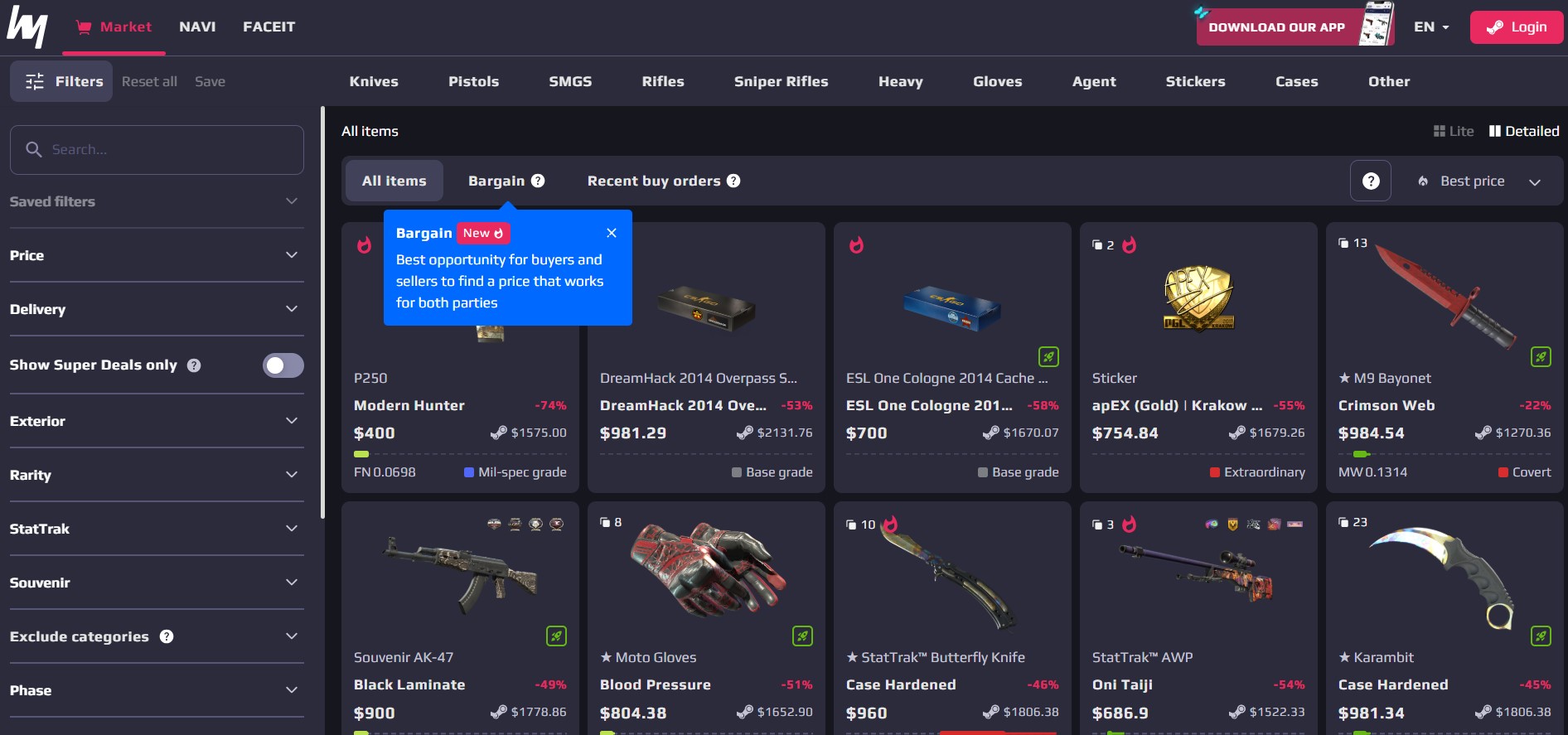
Before you list anything on a CS2 marketplace, you must know its true value. Do not guess blindly. Do not rely entirely on the official market graph. Those numbers are inflated by the Gaben tax.
Check the actual cash price. Look at a few different platforms. See what actual buyers are paying right now for your exact item. If a knife sells for $500 on the official app, its real cash value is probably around $350.
You also need to look at the current market demand. Some items sell ten times a day without fail. We call that high liquidity. You can price those items close to the average, and they will sell fast.
Other items are very rare and weird. Maybe you have a souvenir weapon from an old major tournament. Those take a lot of time to move. You might have to wait weeks for the right collector to browse the CS2 marketplace.
Understanding Float and Wear
Every single item drops with a hidden number attached. This is the float value. It ranges strictly from 0.00 to 1.00. This number decides how scratched the paint looks in the game.
A Factory New item has a very low float. It looks pristine and shiny. A Battle-Scarred item has a high float. It looks heavily beat up and dark.
And that is why it matters so much. Two identical rifles can have vastly different prices based on that tiny number. A 0.01 float might sell for fifty bucks. A 0.001 float might sell for two hundred easily.
Collectors pay huge premiums for perfectly clean pixels. When you check your inventory on a good CS2 marketplace, it shows the exact float clearly. Pay attention to it. You might have a rare gem sitting in your loadout without even realizing it.
Stickers and Applied Value
Stickers complicate things a bit. You can apply up to five stickers on a single gun. Once applied, you cannot take them off and sell them separately. They lose a lot of their initial market value instantly.
But they do not lose all their value. We call this applied value in the community. If you stick a $1,000 sticker on a cheap pistol, the pistol is now worth more. Usually, traders add about 5% to 10% of the sticker’s price to the gun’s base price.
This math gets tricky fast. Finding a buyer who wants that exact combination is tough. A top CS2 marketplace has dedicated search filters for this exact scenario. Buyers can search for four specific stickers on a specific weapon. If you have a matching item, you can name your own price.
Dealing with API Scams
The API scam ruins inventories every single day. An API key is basically a backdoor to your account. It allows third-party tools to see your incoming trades. Scammers want this key badly.
They set up fake tournament sites or fake voting pages. They ask you to log in to support their team. You enter your details without thinking. They grab your API key silently.
Then, you go to a real CS2 marketplace. You decide to sell your knife for cash. You create a trade offer. In a fraction of a second, the scammer’s bot cancels your real offer. It creates a brand-new offer with an identical profile picture and name.
If you click confirm on your phone, you send the knife to the scammer. Always check the registration date of the account you are trading with. A legitimate bot on a CS2 marketplace will have an old account with a high level. A scammer’s bot is usually a brand-new account.
The Future of Trading at a CS2 Marketplace
Nobody knows exactly what happens next. Valve updates the game constantly. They change rules out of nowhere. They adjust trade holds and visibility settings.
But a dedicated CS2 marketplace adapts incredibly fast. When Valve removed the ability to see names in P2P trades, platforms updated their systems within hours. They added confirmation codes to keep things secure for everyone.
The community always finds a way to keep trading alive. Players love building their dream loadouts and showing off rare patterns. As long as the game remains popular, the economy will definitely thrive.
FAQ
Are third-party skin sites actually safe to try?
Yes, the top platforms are very safe. They utilize strong security measures like trade codes and browser extensions to protect you. You just need to avoid phishing links and double-check your trade offers.
How long does it take to get my money?
It depends entirely on the payout method you select. Crypto payouts usually arrive in a few short minutes. Standard bank transfers might take up to five business days to clear.
Can I trade items from other games?
Many sites allow multi-game trading naturally. You can easily swap your Rust items or Dota 2 items for new Counter-Strike weapons on the same platform.
Do I have to give the site my Steam password?
No, never do that. A legitimate CS2 marketplace will only ask you to log in through the official OpenID system. They never see your actual password.
Why are prices lower on these sites than on Steam?
Real cash is simply worth more than locked wallet funds. Sellers are willing to take a 20% to 30% discount because they can actually withdraw the money to their bank account.
What is a P2P trade?
P2P stands for peer-to-peer. It means the virtual item goes directly from the seller to the buyer. This skips the seven-day trade hold that happens when trading with automated bots.
What happens if a trade fails?
If a trade fails, a reliable CS2 marketplace will automatically cancel the transaction. The buyer gets their money back, and the seller safely keeps their item. Support teams are usually quick to resolve these random issues.
Final Thoughts
You need to protect your items at all costs. Rely on common sense when dealing with strangers online. Take your time, double-check your confirmations, and stick to the trusted sites. A solid CS2 marketplace makes trading fun, easy, and profitable. Stay safe out there, and enjoy building your perfect loadout.
You can really help our team out by sharing this post on your social feeds and saving it to your bookmarks for later. Plus, we love connecting with people who want to team up on something exciting. Just shoot the AsamiGames crew a direct message to chat about any creative or commercial projects you have in mind.